Average Reviews:

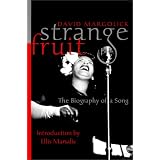
(More customer reviews)I was glad to see the announcement for this book, an essay on Billie Holiday's landmark song, "Strange Fruit." Margolick does a good job of describing the song's origins, its performance by Holiday and its initial reception by audiences and critics.
Unfortunately, there is little analysis of the song's impact on the African-American community or on American society in general. While the narrative is presented well, the commentary is often superficial: "Some African Americans...disliked the song because it portrayed blacks as victims. Others literally feared the song, thinking that far from enlightening people, it would stir up racial hatreds and actually lead to a new wave of lynchings." But which of the many views was dominant? Margolick provides some educated guesses but no real evidence. We see how the song affected particular individuals but not how it influenced the cause of civil rights.
Moreover, the purpose and scope of the book are never made clear. As a biographical essay, STRANGE FRUIT omits much of the context we would need to understand Holiday and her life. As a social commentary, it fails to marshal evidence in a cogent or convincing way. The author presents no critical evaluation of the song itself, and the book is ultimately more a tribute than anything else.
The unusual length of the book also makes it hard to categorize. It's more than a conventional essay yet less than a full-length biography. While the comments of those who knew Holiday are generally interesting, Margolick's attempts to synthesize the material -- to make sense of it all -- often seem forced, incomplete or even contradictory.
STRANGE FRUIT is strangely unsatisfying. Readers who want to understand the song's impact will be left wanting additional evidence and a more thoughtful commentary.
Click Here to see more reviews about: Strange Fruit: The Biography of a Song
Recorded by jazz legend Billie Holiday in 1939, "Strange Fruit" is considered to be the first significant song of the civil rights movement and the first direct musical assault upon racial lynchings in the South. Originally sung in New York's Cafe Society, these revolutionary lyrics take on a life of their own in this revealing account of the song and the struggle it personified. Strange Fruit not only chronicles the civil rights movement from the '30s on, it examines the lives of the beleaguered Billie Holiday and Abel Meeropol, the white Jewish schoolteacher and communist sympathizer who wrote the song that would have an impact on generations of fans, black and white, unknown and famous, including performers Lena Horne, Eartha Kitt, and Sting.
 Get 21% OFF
Click here for more information about Strange Fruit: The Biography of a Song

0 comments:
Post a Comment