Average Reviews:

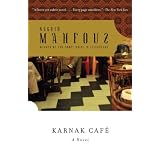
(More customer reviews)Karnak Cafe by Naquib Mahfouz is a hundred page socio-political thriller. Mahfouz's characters gather together in Karnak Cafe, run by a former belly dancer. The regular customers include old men like the narrator, who remember Egypt before 1952 revolution and remember the belly dancer in her prime. The regular customers also include three university students, who are rooted in the present, without a bittersweet nostalgia for past that old people carry within them. Together the cast converses about religion, love, politics and forms the family of Karnak Cafe.
Then one day the students disappear, and when they return, their selves are transformed irreversibly. While the government throws them into prison again and again, their outside world is transformed by the 1967 war. Many years later, the narrator reconstructs the background stories of the three students, who loose their idealism, innocence and zest for life in face of harsh tortures inflicted on them. In a chilling climax, the torturer of these students joins the community of Karnak Cafe, and presents his own disillusionment with the system.
The complexity of times is captured brilliantly in the narrative that follows the personal stories of the protagonists. By presenting social, political and economic tragedies through prism of personalities, Mahfouz creates a compelling and unforgettable novella. The nightmarish Karnak Cafe is a must read, contemporary novel which for me ranks along with Blindness by Saramago and Toni Morrison novels.
Click Here to see more reviews about: Karnak Café
In this gripping and suspenseful novella from the Egyptian Nobel Prize-winner, three young friends survive interrogation by the secret police, only to find their lives poisoned by suspicion, fear, and betrayal.At a Cairo café in the 1960s, a legendary former belly dancer lovingly presides over a boisterous family of regulars, including a group of idealistic university students. One day, amid reports of a wave of arrests, three of the students disappear: the excitable Hilmi, his friend Ismail, and Ismail's beautiful girlfriend Zaynab. When they return months later, they are apparently unharmed and yet subtly and profoundly changed. It is only years later, after their lives have been further shattered, that the narrator pieces together the young people's horrific stories and learns how the government used them against one another. In a riveting final chapter, their torturer himself enters the Café and sits among his former victims, claiming a right to join their society of the disillusioned. Now translated into English for the first time, Naguib Mahfouz's tale of the insidious effects of government-sanctioned torture and the suspension of rights and freedoms in a time of crisis is shockingly contemporary.
 Get 15% OFF

0 comments:
Post a Comment