Average Reviews:

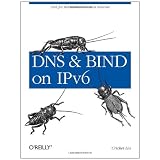
(More customer reviews)DNS & BIND on IPv6 is a short (37 pages e-book, 52 pages print) text that could be considered an IPv6 appendix to the author's book on DNS. It provides a brief introduction to IPv6 addressing, then moves directly into some of the new record types and configurations necessary to allow BIND to support IPv6.
I would consider this a useful booklet for active BIND administrators. The information is available elsewhere, particularly in the RFC's dealing with DNS and IPv6, but this is a much more convenient and succinct format. Background knowledge of DNS and the operation of BIND is assumed by the author, and the material would be far less useful without that foundation.
Those with an interest in network security or design may also find this material of interest, although it does not directly address those areas.
Overall a good resource from an authoritative source, you will have to decide whether the purchase price is justified for such a brief volume.
Click Here to see more reviews about: DNS and BIND on IPv6
If you're preparing to roll out IPv6 on your network, this concise book provides the essentials you need to support this protocol with DNS. You'll learn how DNS was extended to accommodate IPv6 addresses, and how you can configure a BIND name server to run on the network. This book also features methods for troubleshooting problems with IPv6 forward- and reverse-mapping, and techniques for helping islands of IPv6 clients communicate with IPv4 resources.
Topics include:
DNS and IPv6—Learn the structure and representation of IPv6 addresses, and the syntaxes of AAAA and PTR records in the ip6.arpa IPv6 reverse-mapping zone
BIND on IPv6—Use IPv6 addresses and networks in ACLs, and register and delegate to IPv6-speaking name servers
Resolver Configuration—Configure popular stub resolvers (Linux/Unix, MacOS X, and Windows) to query IPv6-speaking name servers
DNS64—Learn about the transition technology that allows clients with IPv6-only network stacks to communicate with IPv4 servers
Troubleshooting—Use the nslookup and dig troubleshooting tools to look up the IPv6 addresses of a domain name, or reverse-map an IPv6 address to a domain name
 Get 11% OFF

0 comments:
Post a Comment